I should first mention that no organization can ever pay me to be featured in my blog or newsletter, nor can they give me any kind of incentive. I mention people and companies because I think they deserve the mention, and that's the only criteria, period.
Having a loved one experience health concerns is always troubling, and it doesn't help that the choices for assistance are so varied and overwhelming. How do you know who will do a good job, and which facilities should be avoided? In general, we have to trust the medical professionals that are supposed to know who's good and who's not for your local area.
Based on such a recommendation from the wonderful staff at University Hospital in Aurora, Colorado, my wife and I recently accepted, on my mother's behalf, the services of an organization called Advanced Health Care. They have many facilities around the U.S., and two in Colorado.
My mother had an injury that occurred several months ago, but was never diagnosed. It was suddenly made much worse about a month ago, when she was staying at our house to recuperate from an unrelated hospital stay. She's 84 as of this writing, and those of you who are in a similar position will understand that when it comes to pain management, there's nothing worse than seeing someone in horrible pain that you can do nothing about. And with no time to spare, it's also difficult to find someone who's trustworthy, as you don't have much time to research, and if you had researched previously, many of those providers are no longer available! Add to that the fact that there are many types of services, and you don't know which will need to be utilized at any given time, and you can get quickly overwhelmed.
After a stay to diagnose, University decided that she needed inpatient rehab, and suggested Advanced Health Care, who, as stated above, actually have many facilities around the nation. Although I can't be certain about the rest of their facilities, it seems quite probable that they're all of the same same high quality as their Aurora location. They specialize in inpatient and outpatient rehabilitation, and short-term nursing. All of their patients anticipate being able to leave, to a specific situation.
My mother was there for 20 days, and was consistently (and constantly) treated with respect, care, and friendship. Staff was never upset or impatient with her, and she grew to know them by name. The provided meals were dependably nutritious, but still fun to eat, and how much she ate was closely monitored without getting in her way. (It's often difficult to get the elderly to eat enough, so they were more concerned with getting her to eat more, than to restrict what she had.) All meals are served in the dining room (not a cafeteria, but more of a restaurant), so people do not get stuck forgotten in their rooms for days on end, as happens in some other facilities.
Rehab exercises were done in two sessions per day, with illustrated instructions given to her so she could continue her regimen after leaving the facility. The entire time, the focus was on getting her back home and independent, not on shoving her out the door for some other facility to deal with.
A social activity of some sort was planned every day, but attendance was not required. Anyone who felt up to it was welcome. Instructions on what she was allowed to do alone and what required assistance were very clear, and staff never ignored her when she needed some help.
And finally, no matter what facility you choose, you should look for one that accepts Medicare, because Medicare demands periodic inspections. The State does do some inspections, but they don't have enough money or trained staff to really do as thorough and demanding a job as Medicare does. Facilities that are not required to be inspected may be just fine, but with no one looking at them before you arrive, my personal belief is that you're asking for trouble. You are completely within your rights asking for the results of the latest Medicare inspection. If the facility has an excuse for not showing them to you, turn around and go anywhere else.
If your or your loved one's situation requires short-term assistance, I would strongly suggest that you call Advanced.
Wednesday, December 9, 2015


Monday, November 9, 2015
Something to Think About When Traveling by Car
I just returned from the 2015 SEMA show in Vegas, the world's largest
gathering of automotive professionals. Most people who come from around
the country choose to fly, but I usually drive, as there are so many
wonderful photographic opportunities along the way. Driving as much as I
do increases the possibility of unfortunate happenings, but they can
actually happen at any time, even for those who drive very little.
I had checked conditions on Vail pass, typically the most treacherous portion of the drive through Colorado on Interstate 70. The forecast was clear, as were the live webcams, so I figured I'd be just fine in my front wheel drive Elantra. I didn't bother to check the approaches to and from The Eisenhower Tunnel.
That was a mistake, though to be fair, many people would have taken that route anyway, rather than going North through Wyoming, or South through New Mexico.
A great deal of sand had been laid on the approach to the tunnel, so traffic was still going about 50mph even though it was snowing, and there was some snow on the road. Often, conditions will be different on the other side of the tunnel, as it's on the other side of the Continental Divide, but tonight that was not the case this fine evening. It was still snowing when I came out of the tunnel, and a great deal of sand had been put down here too, so everyone was still going about 50.
The unexpected part came as I was alongside another car. I heard a sudden, loud sound, much like a gunshot, followed by the sound of glass ricocheting around the passenger compartment. Immediately after, I felt a 50mph, 20 degree wind, and the unique crinkling sound of more glass, as it fell from the window over the plastic interior.
It took me a few seconds to realize that I hadn't been shot, that it was just a rock thrown up by the car next to me. It was very fortunate no one was with me, as we would surely have had to head to the closest emergency room. I was hit by some glass, but didn't get cut too badly. It wasn't long after that, that I realized I was in trouble, as I still had seven hundred miles to go, under potentially highly variable conditions. And that's where the preparation came in.
I pulled over as soon as I could reasonably do so, put on my coat and gloves, and started the process of sealing the former window with gaffer's tape. While certainly inconvenient, it certainly beat the alternative of driving in freezing cold temperatures with no jacket or gloves. Even without the tape, I still would have had a coat and gloves to wear, because I was prepared.
You should be prepared too, and with Winter coming, it's even more important. You should have a survival kit in your car at all times, because so many things can happen. Just one slip of the wheel, and you could be in a ravine overnight, or worse, for several days. It doesn't need to take up much space, either. Here's what I have in my kit:
So why do you need all this if you have a cell phone? It's continually amazing to me how many back roads in the US, and even some stretches of Interstate, have literally NO cell service, despite what those ridiculous maps tell you. So you may not be able to use your phone if you get stuck, and even if you do, what about when it runs out? You need to be able to depend on yourself to get out of a jam on the road. If you're the kind of person who calls 911 if you get a flat tire, then you should really engage in some self-reflection.
Then again, the kind of person who thinks their cell phone will always save them is not the kind of person I'm trying to talk to. I doubt I'll be able to reach you.
I had checked conditions on Vail pass, typically the most treacherous portion of the drive through Colorado on Interstate 70. The forecast was clear, as were the live webcams, so I figured I'd be just fine in my front wheel drive Elantra. I didn't bother to check the approaches to and from The Eisenhower Tunnel.
That was a mistake, though to be fair, many people would have taken that route anyway, rather than going North through Wyoming, or South through New Mexico.
A great deal of sand had been laid on the approach to the tunnel, so traffic was still going about 50mph even though it was snowing, and there was some snow on the road. Often, conditions will be different on the other side of the tunnel, as it's on the other side of the Continental Divide, but tonight that was not the case this fine evening. It was still snowing when I came out of the tunnel, and a great deal of sand had been put down here too, so everyone was still going about 50.
The unexpected part came as I was alongside another car. I heard a sudden, loud sound, much like a gunshot, followed by the sound of glass ricocheting around the passenger compartment. Immediately after, I felt a 50mph, 20 degree wind, and the unique crinkling sound of more glass, as it fell from the window over the plastic interior.
It took me a few seconds to realize that I hadn't been shot, that it was just a rock thrown up by the car next to me. It was very fortunate no one was with me, as we would surely have had to head to the closest emergency room. I was hit by some glass, but didn't get cut too badly. It wasn't long after that, that I realized I was in trouble, as I still had seven hundred miles to go, under potentially highly variable conditions. And that's where the preparation came in.
I pulled over as soon as I could reasonably do so, put on my coat and gloves, and started the process of sealing the former window with gaffer's tape. While certainly inconvenient, it certainly beat the alternative of driving in freezing cold temperatures with no jacket or gloves. Even without the tape, I still would have had a coat and gloves to wear, because I was prepared.
You should be prepared too, and with Winter coming, it's even more important. You should have a survival kit in your car at all times, because so many things can happen. Just one slip of the wheel, and you could be in a ravine overnight, or worse, for several days. It doesn't need to take up much space, either. Here's what I have in my kit:
- Small backpack - everything should be able to fit in this backpack, so it's easy to keep everything together. And you can take it with you easily if you have to walk.
- Jacket or coat
- Plastic poncho
- Hand warmers
- Flashlight
- Socks
- Toilet paper
- Whistle
- Quarters
- Small mirror
- Matches
- Gloves
- Blanket
- Sunblock
- Folding knife, as long as it's legal in your state
- Non-perishable food - several thousand calories, such as emergency protein bars, fruit rolls, tootsie rolls, beef jerky, and raisins. Replace it every year.
- Tape - Gaffer's tape, which is like duct tape but doesn't leave a residue. It's expensive, so you can use duct tape instead, or even hose tape, but have something.
- Compass - this one won't do you any good unless you know how to use it, so learn.
- Band-Aids
- Neosporin
So why do you need all this if you have a cell phone? It's continually amazing to me how many back roads in the US, and even some stretches of Interstate, have literally NO cell service, despite what those ridiculous maps tell you. So you may not be able to use your phone if you get stuck, and even if you do, what about when it runs out? You need to be able to depend on yourself to get out of a jam on the road. If you're the kind of person who calls 911 if you get a flat tire, then you should really engage in some self-reflection.
Then again, the kind of person who thinks their cell phone will always save them is not the kind of person I'm trying to talk to. I doubt I'll be able to reach you.
Friday, October 9, 2015
The Tamron 150-600mm - Why I'm Not Buying it, But You Might
Intro
I'm not going to be buying the Tamron 150-600mm superzoom. Since my reasons are my own alone, I'm going to give you the pluses and minuses, and let you decide for yourself. And I'm actually hopeful that my condemnation of the lens might actually cause you to buy it, since we're all looking for different things.
I read reviews of camera gear just like any other photographer, and some of them can be quite helpful. Others not so much. Sometimes I want to see specs, sometimes not, sometimes a user experience, sometimes I don't care, you get the idea. My interests are varied, depending on the gear and why I'm looking at it.
A quick note for ALL reviewers of ALL camera bodies and lenses, though: Stop including tiny sample images in your posts and reviews! They're absolutely worthless. It does no one any good to see a 35 Meg image shrunk to 1000 pixels wide, thinking that it tells us something about the camera or lens. If you're going to include images, then either crop them to 100% view, or include the full-resolution images behind a click. And even then, you MUST include a comparison image of something else in order for the image to mean anything at all.
Why Do This?
Since I don't really do gear reviews, one might wonder why I'm "reviewing" this lens in the first place. I've mentioned previously, and in almost every conversation I have with fellow photographers, that your gear doesn't really matter, so why bother caring now? The answer is that I will attempt to prove my assertion by looking at a piece of gear much more expensive than what I currently use. I approached the Tamron with an open mind; I was fully prepared to buy it to replace an aging lens I depend on every day.The Baseline Lens
 |
| Nikon 100-300mm f/5.6 (Image courtesy Leicashop.com) |
But the shots it does take look extremely nice. The focus is good, the vignetting is controllable, and the distortion is smooth enough that I almost never even correct for it because it doesn't bother me, particularly when I combine 300 shots to make a panoramic image.
The Contender
 |
| Tamron 150-600mm f/5-6.3 (Image courtesy Tamron) |
Lens-to-Lens Shot Comparison
Both of these shots were taken at 300mm, using the same f/8, 1/800, ISO 100 settings.
 | ||
| Nikkor 100-300mm, 100% crop from center of frame. f/8, 1/800, ISO100 |
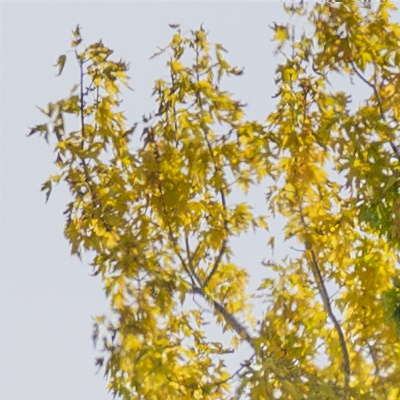 |
| Tamron 150-600mm, 100% crop from center of frame. f/8, 1/800, ISO100 |
The Tamron took in a little more light (and thus, color intensity) at the same setting, which could be attributed to a number of things, not the least of which could be that the light changed during the minute I took to change lenses. So I'm not concerned with that either. What matters to me is sharpness. I've been looking for a newer lens that will give me more sharpness overall, so that my panoramas can be blown up even bigger. My current high score for a pano is twelve feet by forty-eight feet at a full 300 dpi.
It's clear that the Nikkor is sharper, discounting the portions of the Tamron image where there's motion blur.
The Good and The Bad
Here's what the Tamron has going for it:
1. Works much better with the camera, taking some responsibility away from me.
2. Much greater reach. I used all 600mm of it when shooting from a mile away, and was very pleased with the results.
3. Adobe has a lens profile for it, making it easy to correct in post.
4. A truly great Image Stabilization system, increasing the lens's usefulness and ease of focus even on a tripod. Getting stability at 600mm is no joke, no matter what kind of tripod you have.
Now on the Nikkor's side:
1. Better sharpness.
2. I already own it.
You can read everyone else's blog, where they will all say that lens sharpness isn't important, but technique is. Let's say that's completely true (and I do believe that the technique argument is completely true). If so, then why ever buy a new lens to replace one with the same zoom range you already own? After all, whatever my technique level, it would be the same level with both lenses. The only possible answers would be convenience and features.
The Tamron has wonderful new features that would make it more convenient for me to shoot. But that's going to have to be a tremendous amount of convenience to make me part with that kind of money. For me, the money can only be spent if the final product is better, which in this case, for what I shoot, it will not be.
If you shoot wildlife, motorsports, or celebrities, your shots will end up better with the Tamron. In my case, my shots will suffer. I'll just need to learn to live without the 600mm reach, and build my own lens profile for Photoshop. When the Nikkor finally fails, I'll just get another one from EBay.
Monday, September 7, 2015
Carnage on Larimer - 2015
I've mentioned in a previous post why you should be going to this show, and this year's event was the perfect example. There is quite simply no other show where you'd be able to see a Chevy pickup with tractor seats welded to the bumper, sitting right next to a Ferrari 250 GTO. Bear witness, ye heathens, and rejoice:

That GTO's no trailer queen, either, It had a transponder on the windshield for E-470, our local toll road/speedway, and there were obvious signs it had been driven quite a bit. Hey, are there any fun people who go to this show? Why yes. Yes, there are:

As is always the case here, there are all kinds of people. All races, nationalities, cultures and ages appear alongside each other, just to have fun and be a big family. I suppose it seems odd that I picked the white people as an example of that, but I took their picture because they were quirky and obviously having fun.
But wait, you say, were there any Rat Rods? Um, yes. A ton. Here are a few:


Rat rods are reflections of the habits and predilections of their owners, most often with a wry sense of humor. That humor is evident here in the fan shroud made of license plates, as well as the grille made to look like teeth. That grille is what all owners of cars and trucks with that style of grille think of anyway, so why not just go for the gusto and make it obvious?
And there were Model A's, 30's, 40's and 50's classics as well. Like these:

This is really just another view of two of the rat rods, since I feel like they belong in both categories.

Mercs are a mainstay of every type of car show, sometimes mild, often wild, and always with a healthy dose of style.
How about 70's and 80's rides? Any of those? Well, yes.

You don't see too many early-70's Mustang convertibles anymore, much less with a flame job that obviously took a great deal of time to complete.

But with all that, surely there couldn't have been bikes too, could there?
Yes, there could.

And this is only about a third of the bikes that showed up. Here's a view of one portion of one block of the show as a whole:

So where was I in this show? I was in the Art section. Here's my booth:

And here are a couple of booths of friends of mine, like Old School Alex:

Alex uses woodcutting as a base for his portraits, allowing him to make multiple identical copies of a completely analog process. he even uses the subtractive technique to allow for color printing from one block.
Also showing was Steve Haugen from Victory Illustration:

I've known Steve for several years, and he's the go-to guy for poster art for almost every event in Colorado. While his talent is well-known, it's worth noting that he's very unassuming, and is not impressed with himself, as so many artists are. A wonderful guy to hang around.
I'm very pleased to report that this was my most successful show EVER, and that includes art shows and every car show I've ever done. What a tremendous thrill, and a huge THANK YOU to Raul for inviting me back this year.
I hope to see YOU there in 2016!
Saturday, August 8, 2015
Denver County Fair Post-Show Wrapup
A HUGE Thank You to all of my new friends who dropped by my booth at last weekend's Denver County Fair at the National Western Complex!
I've never shown at the Denver County Fair previously, and it's still a young show, with 2015 being its 5-year anniversary. I admit I felt some trepidation when I started hearing about things like the Kitten Pavilion and Davey B. Gravey's Tiny Cinema. I'm used to art fairs, gallery showings, and other affairs where everything's quiet and subdued.
This was not that.
Thunder and cacophony abounded throughout the entire Complex, with contests, classes, dancers, bands and poetry readings coming from every available stage, and those stages were everywhere. There was a huge kid's area, the biggest model train setup I've ever seen outside of a permanent installation, food and diorama contests (sometimes in the same contest, with Peeps dioramas), an art gallery as big or bigger than any retail location, cosplay characters roaming the aisles, and none of that even touches on the vendor booths that were present.
Every imaginable type of booth was there, and then a bunch more you never dreamed could exist. Not only clothing, food, souvenirs and storm windows, but also fortune tellers, booths hawking other conventions, knives, sculpture, travel, and I don't even know what else. Local Legend Kenny Be had a booth too, offering giant prints of his utterly fantastic new Colorado Map.
 |
| My Booth at the Denver County Fair! |
Other than meeting new people, the biggest highlight of the whole Fair for me was seeing the poetry reading contest, when one of the guys from Poetry on Demand was delivering a particularly dramatic reading during one of the contests on a nearby stage. His mic had some feedback, but instead of standing there waiting for someone to do something, he instead used that opportunity to put the mic in the stand, walk out to the front of the stage, and quite forcefully address his audience one-on-one, intimately and aggressively. It was so effective, he got the most rousing, cheering response of any reader that day, and it was very well-deserved. I don't know his name, but if anyone does, let me know and I'll update this entry. It was truly unforgettable.
In the end, it was far from ordinary. One might even say it was off-center. But it was a larger gathering than any of these individual groups would probably experience in Colorado. And despite (perhaps because of) the disparate nature of all the groups, everyone got along just great. There was no rivalry or territorialism, only fun, and people who came only for their specific interest still got to experience other cultural phenomena, and interact with people they would otherwise never see.
I had a great time, and if you did too, I invite you to go again next year.
See you then!
Ted Stevens Helps Me Prove It's Not Your Gear
Longtime readers will recognize that I spend a great deal of time telling you that it's not what gear you own that's important, or how much, but what you do with it.
Today I start to show real-world examples of this being the case. To start off, I'll use Ted Stevens, who is currently traveling around the USA finding adventures to get into. Here's one of his pictures from Arches National Park, one of my two favorite places on the planet, highlighting Skyline Arch and the area around it.
This is quite simply a wonderful shot. Here are the things that I find to be "right" about this shot:
So what big full-frame camera and expensive lens did he use? Did he have to buy a special tripod to get so low? Was this shot 45 of 76 in trying to get the best shot?
No. He used an iPhone 6 on full auto mode, handheld. First try. Because he cared about what he was shooting, and took the time to get it right.
Now get out there and take some interesting shots!
Today I start to show real-world examples of this being the case. To start off, I'll use Ted Stevens, who is currently traveling around the USA finding adventures to get into. Here's one of his pictures from Arches National Park, one of my two favorite places on the planet, highlighting Skyline Arch and the area around it.
 |
| Skyline Arch, taken by Ted Stevens |
- The foreground - we see something of interest that catches our eye, and is in focus
- The background - this is obviously of interest as well, and it's framed so that we can see the entire formation. Although it's mostly in focus, it doesn't need to be in perfect focus, as it would compete too much with the cactus, and make the image as a whole feel "flat."
- It tricks the eye into looking at both the foreground and the background. While most people would be content to shoot only the Arch (and you can see thousands of examples of that kind of thinking on the Web with this very formation), Ted decided that highlighting the cactus, something usually overlooked in such a grandiose location, would be more interesting. But to hold our interest, he added Skyline Arch, so that we could judge both of them in context with each other. Neither one detracts from the other, they only add together.
- The Sun is behind the Arch. I wouldn't have even thought to do this, but having the Arch in shade prevents it from drawing too much attention away from the cactus. We still see how majestic it is, enhanced by the oblique sun hitting portions of the Arch at an angle. mostly shadow, with a few highlights, but we still see the entire formation.
- Objects of interest are scattered around the frame, following the Rule of Thirds, rather than being centered. The Rule of Thirds doesn't always need to be followed, but doing so is quite effective in this case.
So what big full-frame camera and expensive lens did he use? Did he have to buy a special tripod to get so low? Was this shot 45 of 76 in trying to get the best shot?
No. He used an iPhone 6 on full auto mode, handheld. First try. Because he cared about what he was shooting, and took the time to get it right.
Now get out there and take some interesting shots!
Friday, August 7, 2015
Sigh... Another Waterfall Shot?
I found an interesting entry in another photographer's blog, who shall remain nameless, talking about how he loved photographing waterfalls, but didn't do it too much because he hadn't figured out a way to make money doing it. It seems as though everyone has a camera, there are waterfalls everywhere, and people just don't want to buy a picture of something they see all the time.
The same can be said of so many photographs of nature in all its forms. There's an almost uncountable number of people taking pictures and putting them on the Web and Facebook, resulting in such viewer saturation that there's no reason to buy them. Why pay for a picture of Maroon Bells when you've seen a thousand views of it already?
It's an interesting problem for the professional photographer, and not many people have figured out how to get around it. No matter what you're shooting, no matter how long you waited for the shot, how much time you spent in the lab processing, no matter what nifty technique you used, you'll find an almost identical shot done by someone else, and it might be done better. Even if it's not as good, a professional knows that not many people can tell the difference, so it can still be a little deflating to see the sheer volume of like-minded people.
I didn't mention the photographer at the outset of this post, mostly because I didn't think his waterfall shot was all that great. There wasn't really anything wrong with it; the colors were very nice, he had spent some time processing it to make it look very sunny and pleasant. But it didn't speak to me at all.
Don't get me wrong, art is art if it speaks to someone. But in trying to start that conversation, any artist must first come up with a conversation that's meaningful to them. What I'm saying is, I would have deleted that picture, and tried to take another one that said something that was important to me. Only then can an artist communicate with someone else, and only at that point will money be made. If that particular photographer was thrilled with the shot he took, then more power to him. But I want to speak to people who are driven by different things.
So I'll put my money where my mouth is. Here's a picture I took of Bridalveil Falls in Yosemite earlier this year.
It speaks to me in a vintage, foreboding sort of way. It reminds me of the Hudson River School of painting, and is all the more interesting to me because it wasn't taken at the lookout point. It was taken at a spot where most people wouldn't even think to look up, much less try to frame a shot. To me, that helps make it more unique, and the lighting makes it timeless as well.
I'm interested in whether or not this picture speaks to you as a viewer on some emotional level. If it does, I'm willing to send you, absolutely free, a signed 8x10 print of this picture to hang in your home or office. Drop me an email, and I'll get it right off in the mail to you. I'll need your mailing address, obviously, so don't forget to include it. But I'm also going to put you on my once-a-month mailing list, if you're not already on it.
Have fun with whatever art you enjoy!
The same can be said of so many photographs of nature in all its forms. There's an almost uncountable number of people taking pictures and putting them on the Web and Facebook, resulting in such viewer saturation that there's no reason to buy them. Why pay for a picture of Maroon Bells when you've seen a thousand views of it already?
It's an interesting problem for the professional photographer, and not many people have figured out how to get around it. No matter what you're shooting, no matter how long you waited for the shot, how much time you spent in the lab processing, no matter what nifty technique you used, you'll find an almost identical shot done by someone else, and it might be done better. Even if it's not as good, a professional knows that not many people can tell the difference, so it can still be a little deflating to see the sheer volume of like-minded people.
I didn't mention the photographer at the outset of this post, mostly because I didn't think his waterfall shot was all that great. There wasn't really anything wrong with it; the colors were very nice, he had spent some time processing it to make it look very sunny and pleasant. But it didn't speak to me at all.
Don't get me wrong, art is art if it speaks to someone. But in trying to start that conversation, any artist must first come up with a conversation that's meaningful to them. What I'm saying is, I would have deleted that picture, and tried to take another one that said something that was important to me. Only then can an artist communicate with someone else, and only at that point will money be made. If that particular photographer was thrilled with the shot he took, then more power to him. But I want to speak to people who are driven by different things.
So I'll put my money where my mouth is. Here's a picture I took of Bridalveil Falls in Yosemite earlier this year.
 |
| Bridalveil Falls, Yosemite |
It speaks to me in a vintage, foreboding sort of way. It reminds me of the Hudson River School of painting, and is all the more interesting to me because it wasn't taken at the lookout point. It was taken at a spot where most people wouldn't even think to look up, much less try to frame a shot. To me, that helps make it more unique, and the lighting makes it timeless as well.
I'm interested in whether or not this picture speaks to you as a viewer on some emotional level. If it does, I'm willing to send you, absolutely free, a signed 8x10 print of this picture to hang in your home or office. Drop me an email, and I'll get it right off in the mail to you. I'll need your mailing address, obviously, so don't forget to include it. But I'm also going to put you on my once-a-month mailing list, if you're not already on it.
Have fun with whatever art you enjoy!
Subscribe to:
Posts (Atom)